Skip Navigation Email us Call us: +44 (0)7585 667 248

Tips for Keeping Cool: Helping Your Child Sleep Through Hot Nights

Tips for Keeping Cool: Helping Your Child Sleep Through Hot Nights

A hot night can undo everything. The routine that works all winter, the carefully set up bedroom, the familiar bed your child finally settles in: all of it gets harder when the room refuses to cool down. Add a child who is already restless and a heatwave can leave the whole family wrung out by morning.

The good news is that keeping a child cool at night is mostly a handful of small, cheap habits done at the right time of day. This guide covers the ones that make a real difference, how fans work with an enclosed safe space bed, and what to do on the rare nights when nothing short of air conditioning will help.

None of it is complicated. Most of it starts long before bedtime.


Elephant

Why Hot Nights Hit Harder

Everyone sleeps worse in the heat, but for many autistic children the problem runs deeper. Some feel heat more intensely than others do. At the same time, differences in interoception, the sense that reads signals from inside the body, mean a child may not recognise that they are too hot, let alone be able to tell you. Overheating often shows up as behaviour instead: restlessness, irritability, more stimming than usual, or a child who suddenly cannot settle in a bed they normally love.

So rather than waiting to be told, check for yourself. Feel your child's chest or the back of their neck. Warm is fine; hot, damp or flushed means they need cooling down. Hands and feet often feel cool even when a child is too warm, so they are not a reliable guide.

The target is the same one we give in our bedroom guide: a room between 16 and 20 degrees. The Lullaby Trust recommends the same range, and a small thermometer in the bedroom takes out the guesswork.

One honest note about enclosed beds. A safe space bed holds a little more warmth than an open bed, which is exactly why ours are built with mesh vertical ventilation panel on the front to keep fresh air moving through. In summer that netting quietly earns its keep, and we come back to it shortly.


Monkey

Keep the Heat Out Before It Gets In

The battle for a cool bedroom is won during the day. Once heat has soaked into a room it is very hard to shift at seven in the evening, so the trick is to stop it getting in at all.

Keep blinds or curtains closed on any window the sun reaches during the day. It feels wrong to shut out a lovely morning, but a sun-facing bedroom with open curtains becomes a greenhouse by evening. Keep the windows closed too while the air outside is hotter than the air inside, then open them in the evening once it is cooler out than in and get air moving through the house. This is the same advice the UK Health Security Agency gives every summer, and it works.

Two smaller habits help as well. Switch off anything electrical in the bedroom that does not need to be on, since TVs, consoles and chargers all quietly give off heat. And if you can open windows on different sides of the house, a through-draught clears warm air surprisingly fast.


Tiger

Fans and the Netting Advantage

A fan is the single most useful piece of kit on a warm night, and it happens to pair beautifully with an enclosed bed.

Parents sometimes worry that a safe space bed and a fan cannot work together, because the fan obviously cannot go inside the bed. In fact the design solves the problem for you. The sides of our beds can have some netting, with high and low level mesh ventilation panels on the Safe & Sound Pod and breathable mesh panels on the Travel Pod, so air passes straight through them. Place a fan outside the bed and the breeze reaches your child inside, while the fan itself, its cord and its plug all stay safely out of reach.

A couple of pointers. Set the fan a little way back and let it wash air across the bed rather than blowing straight at your child all night, which is the Lullaby Trust's advice too. Moving air is also drying, so keep the drinks going through the evening. And for children who like white noise, the steady hum of a fan is often a bonus rather than a problem.


Platypus

Cool the Child, Not Just the Room

Even in a warm room, a cool child sleeps. A few simple swaps make more difference than you might expect.

Change to summer bedding: a light cotton sheet instead of a duvet, and cotton pyjamas or just a vest on the hottest nights. Natural fabrics breathe where synthetic ones trap heat, and that matters even more inside an enclosed bed, so this is also the season to check that the bedding is the breathable kind. Keep to textures your child already tolerates, though. A brand new sheet with an unfamiliar feel can cause more trouble than the heat ever would.

A lukewarm bath slots neatly into the usual routine and takes body temperature down just before bed. Slightly cool rather than cold is right, as icy water makes the body work to warm itself back up.

Then there is water. Keep drinks going through the day rather than playing catch-up at bedtime.


Armadillo

When the Room Is Just Too Hot

Here is the honest bit. A fan moves air around but it does not make the room any cooler, and in serious heat, once temperatures pass the mid-thirties, a fan on its own stops helping much at all. Some rooms simply cannot be shaded and ventilated into submission: loft bedrooms, big south-facing windows, or a proper heatwave where the night never cools off.

In those cases a portable air conditioning unit may be the only realistic way to bring the temperature down. It is not a small purchase, but for a child whose sleep falls apart every summer it can be the difference between a hard week and a lost month.

Two things to know before you buy. First, every portable unit needs to vent its hot air out through a window, so a window seal kit is worth having; without one, the warm air leaks straight back in. Second, they are not silent. For a sound-sensitive child, look for a model with a quiet or sleep mode, or simply run the unit hard before bedtime to pre-cool the room and switch it off when your child goes down. A cool, quiet room at lights-out is the real goal.


Kangaroo

Keep It Simple

Most hot nights do not need gadgets. Shade the room by day, open the windows when the evening cools, put a fan outside the bed and let the netting do its job, swap to light cotton bedding and keep the drinks going. That covers all but the most extreme weather, and for the rare nights beyond that, air conditioning exists.

If you are setting up or rethinking the bedroom more broadly, our guide to creating a calming autism-friendly bedroom picks up where this one leaves off. And if you are wondering whether a safe space bed could work for your child, summer included, get in touch or book a free virtual assessment. No pressure, just honest advice from people who talk about sleep all day.

Frequently Asked Questions

What temperature should my child's bedroom be at night?

+

Between 16 and 20 degrees is the range recommended by the Lullaby Trust and the one we work to in our bedroom guide. A small room thermometer takes out the guesswork. In summer the aim is simply to get as close to that range as you can using shade, ventilation and, if needed, a fan or air conditioning.

Can I use a fan with an enclosed safety bed?

+

Yes. Place the fan outside the bed and the breeze passes straight through the breathable netting to your child inside, while the fan, cord and plug stay safely out of reach. Set it back a little and let it wash air across the bed rather than pointing it directly at your child all night.

Do safe space beds get hotter than ordinary beds in summer?

+

An enclosed bed holds slightly more warmth than an open one, which is why ours are designed with high and low level mesh ventilation panels to keep air moving through. With breathable bedding, a cool room and a fan outside the bed if needed, the temperature inside stays close to the room itself. Feeling your child's chest or the back of their neck is the quickest way to check they are comfortable.

Is a portable air conditioner worth it for a child's bedroom?

+

In most UK summers, shade, ventilation and a fan are enough. But if the room stays seriously hot at night, in a heatwave or a loft bedroom for example, a portable air conditioning unit may be the only way to genuinely lower the temperature. Choose a quiet model or pre-cool the room before bedtime, and vent the hose through a window with a seal kit so the heat cannot leak back in.


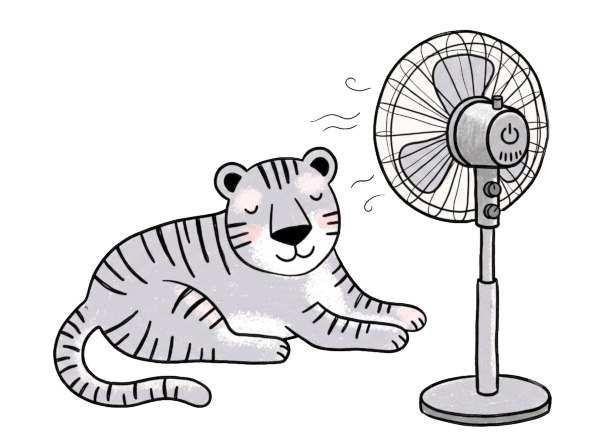
A contented tiger keeping cool in front of a fan